Posts

The Next Frontier in HCP Analysis and Optimization

Image
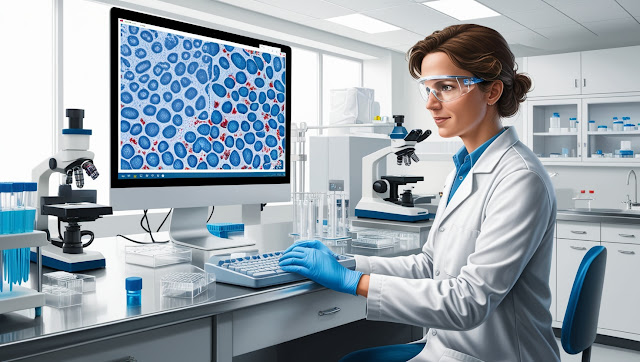
  In today’s pharmaceutical, academic, and industrial landscapes, Host Cell Protein (HCP) analysis has emerged as a critical factor in ensuring the safety and efficacy of biologics. As a leading protein analysis lab serving pharma, academia, and industry, we at Kendrick Labs understand the evolving challenges and opportunities in HCP analysis. With advancements in technology and ever-stricter regulatory requirements, the time to adopt innovative solutions in HCP analysis is now. Here’s how cutting-edge methodologies and tools are driving the next frontier in HCP analysis and optimization. Why HCP Analysis Matters More Than Ever HCPs are residual impurities derived from the host cells used in biopharmaceutical production. These proteins, if left unchecked, can compromise the safety, efficacy, and stability of biologic products. Regulatory agencies such as the FDA and EMA impose stringent requirements on biopharma companies to detect and quantify HCPs in their products, making ac...

2D Gels in Action: Practical Applications for Labs

Image
  In the world of protein analysis, few tools are as versatile and essential as 2D protein gels. These powerful analytical tools have become indispensable for laboratories working across pharmaceutical research, academic studies, and industrial applications. Provided by Kendrick Labs, Inc., our expertise in protein analysis ensures precision and actionable insights that advance science and innovation. What Are 2D Protein Gels? 2D protein gels, or two-dimensional gel electrophoresis, are an advanced method for separating proteins based on their isoelectric point (pI) and molecular weight. This two-step process allows scientists to visualize complex protein mixtures in high resolution. The method is a cornerstone of proteomics, enabling researchers to identify, quantify, and analyze proteins in a sample with unparalleled accuracy. Key Advantages of 2D Protein Gels High-Resolution Protein Separation: 2D protein gels allow the separation of hundreds or even thousands of protei...

Cutting-Edge Lab Applications of 2D Gel Technology

Image
In the rapidly advancing world of protein research, 2D gel technology has emerged as a crucial tool, providing significant breakthroughs in the analysis and characterization of proteins. As a leading company for protein analysis in pharma, academia, and industry, Kendrick Labs, Inc . stands at the forefront of incorporating 2D gel electrophoresis into cutting-edge lab applications. This technique plays a pivotal role in understanding complex biological processes, disease mechanisms, and drug development. Here, we delve into how 2D gel technology is revolutionizing protein analysis and why it is indispensable for modern lab research . What is 2D Gel Technology? 2D gel electrophoresis (2D GE) is an advanced method that separates proteins based on two distinct properties: their isoelectric point (pI) and molecular weight. This dual separation method offers unparalleled resolution and is ideal for analyzing complex protein mixtures, which are common in biological systems. The first d...

The Science Behind HCP Coverage Analysis in Biotech

 Safety and efficacy of therapeutic proteins are critical in biotechnology. Certainly, one part of the whole process, a role that falls during HCP coverage analysis, is essential when it comes to assessing the risk of host cell protein contamination in biopharmaceuticals. Kendrick Labs, Inc. is a leading protein analysis company operating on the most excellent services tailored for pharma, academia, and industry. This blog peels out the science behind HCP coverage analysis and its importance in biotech. Understanding HCP Contamination Host cell proteins are the impurities that occur side by side with the biopharmaceutical manufacture process, especially in cell culture. These proteins have a tendency to pose a grave threat for patients because of immunogenicity, decreased therapeutic efficiency, or severe adverse reaction . Therefore, in-depth knowledge of HCP contamination and appropriate HCP coverage analysis is essential for biopharmaceutical companies that have strong think...

Precise 2D Gel Electrophoresis for Pharma Research: A Breakthrough in Protein Analysis

Image
  Precision is all about the pharmaceutical world, with fast movement. New drug development is contingent upon actual understanding of proteins involved in the disease as well as in treatment. And this is precisely where 2D Gel Electrophoresis plays a crucial role. Kendrick Labs, Inc. is the company which specializes in providing precise and reliable protein analysis for pharmaceuticals, academia, and related industries. Our expertise in 2D Gel Electrophoresis enables researchers to gain the highest critical insights in such protein structures and post-translational modifications as well as expression patterns that plays a crucial role in drug development. What is 2D Gel Electrophoresis? 2D Gel Electrophoresis is a very efficient method of separating proteins based on two independent characteristics: isoelectric point (pI) and their molecular weight. In the first dimension, proteins are separated based on their pI during isoelectric focusing. Separation based on molecular weigh...

Biotech Breakthrough: Unraveling the Secrets of Protein Analysis with SDS-PAGE

Image
  Proteins have now emerged as a hot issue in the biotech industry and drive innovation in pharmaceuticals, academia, and other industrial areas. One of the most powerful and reliable methods for the analysis of proteins is SDS-PAGE (Sodium Dodecyl Sulfate-Polyacrylamide Gel Electrophoresis). At Kendrick Labs, Inc., we take pride in being a leader in the area of protein analysis services, providing innovative state-of-the art solutions to assist companies and research institutions in solving complexities concerning protein behavior. This blog post dives deep into the significance of SDS-PAGE analysis and its breakthrough potential in biotechnology. In pharmaceutical research labs or industrial organizations, SDS-PAGE offers some of the most detailed views of your protein samples, which helps you in drug discovery and biomarker identification, as well as ensuring quality control. What is SDS-PAGE?              ...

How Does Gel Electrophoresis Differ from SDS-PAGE? Provided by Kendrick Labs, Inc.

Image
  Gel electrophoresis and SDS-PAGE are two essential techniques used to analyze biomolecules like proteins and nucleic acids. Though they are related and often used together, they have distinct characteristics and serve different purposes depending on the scientific needs of researchers. Understanding the key differences between gel electrophoresis and SDS-PAGE is vital, especially for those utilizing advanced technologies like 2D Gels . In this blog, we'll explore how gel electrophoresis differs from SDS-PAGE and how 2D Gels play a critical role in protein analysis, offered by Kendrick Labs, Inc. What is Gel Electrophoresis? Gel electrophoresis is a technique used to separate molecules based on their size, charge, or shape. The process involves placing samples, such as proteins or nucleic acids, into a gel matrix (either agarose or polyacrylamide), and applying an electric current. Molecules move through the gel at different rates depending on their properties, allowing for ...